

How Much Will Medicare Cost Me Per Month in 2027?
If you're planning for Medicare in 2027, one of the biggest questions on your mind is likely, "How much will Medicare cost me each month?" Most beneficiaries pay premiums, deductibles, and other out-of-pocket costs depending on the coverage they choose, so it is good to stay informed.
The good news is that Medicare costs are generally predictable. Each year, the Centers for Medicare & Medicaid Services (CMS) announces updated premiums and deductibles for Medicare Parts A and B, allowing beneficiaries to budget for healthcare expenses ahead of time. For 2027, most beneficiaries will see a small increase in their Medicare costs.
The Standard Medicare Cost for Most People
Medicare costs typically begin with Original Medicare, which includes Part A (hospital insurance) and Part B (medical insurance). While Part A is premium-free for the majority of beneficiaries, nearly everyone enrolled in Medicare pays a monthly premium for Part B coverage.
Medicare Part B covers many of the healthcare services retirees use throughout the year, including doctor visits, outpatient care, preventive screenings, and medical equipment. Because of this, the Part B premium is often considered the baseline cost of Medicare coverage.
In 2027, most Medicare beneficiaries can expect the following costs:
- Part A Premium: $0 per month for most people who worked and paid Medicare taxes for at least 10 years (40 quarters).
- Part A Deductible: $1776 in 2027.
- Part B Premium: $209.40 per month in 2027.
- Part B Deductible: $292 annually before Medicare begins paying its share for many Part B services.
For many retirees, this means their standard Medicare cost starts around $209.40 per month, although additional coverage choices may increase that amount.

What Does Medicare Part B Cover?
When people think about using Medicare on a regular basis, they're often thinking about services covered under Part B. Unlike Part A, which primarily covers hospital stays, Part B helps pay for the routine medical care and preventive services that help beneficiaries stay healthy and manage chronic conditions.
Whether you're scheduling an annual wellness visit, seeing a specialist, or receiving outpatient treatment, Part B is often involved.
Part B helps pay for:
- Doctor visits
- Outpatient care
- Preventive services
- Lab work and diagnostic testing
- Durable medical equipment
- Certain home health services
Higher-Income Beneficiaries May Pay More
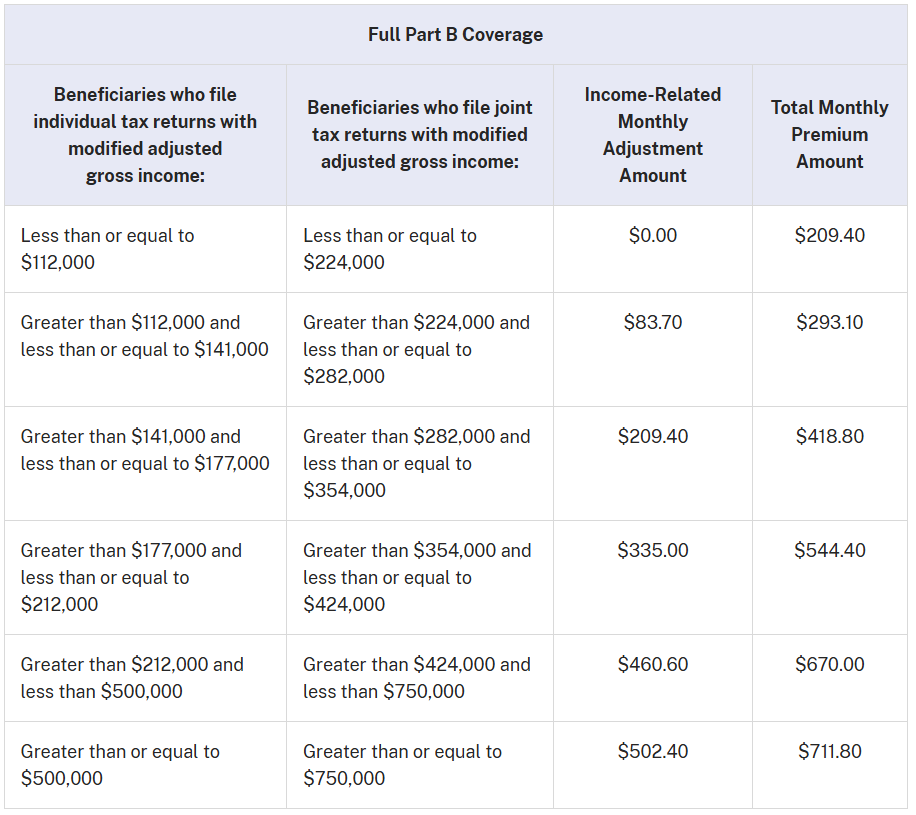
Not everyone pays the standard Medicare Part B premium. Medicare uses a sliding scale known as the Income-Related Monthly Adjustment Amount (IRMAA) to determine whether higher-income beneficiaries should contribute more toward their coverage.
IRMAA is based on your tax return from two years prior. For example, your 2027 Medicare premiums will generally be determined using income information reported to the IRS from 2025. If your income exceeds certain thresholds, you may pay an additional surcharge on top of the standard Part B premium.
In 2027, individuals with modified adjusted gross income above $112,000 and married couples filing jointly with income above $224,000 may be subject to IRMAA charges. It is worth noting that you may be able to appeal IRMAA in certain situations, like recently retiring, or making a one-time lump sum income. Talk to your agent to see if you qualify.
Monthly Part B premiums for higher-income beneficiaries range from:
What If You Have to Pay for Medicare Part A?
Most Americans qualify for premium-free Part A because they or their spouse worked and paid Medicare taxes for at least 40 quarters, or roughly 10 years. However, individuals who don't have enough work credits may need to purchase Part A coverage.
This situation most commonly affects people who spent significant time outside the workforce, recently became eligible for Medicare, or have limited U.S. work history. While these beneficiaries can still enroll in Medicare, they may face an additional monthly premium beyond their Part B costs.
In 2027:
- Individuals with 30-39 quarters of Medicare-covered employment will pay $328 per month.
- Individuals with fewer than 30 quarters of coverage will pay $597 per month.
For those who must purchase Part A, total Medicare costs can be considerably higher than the standard premium most beneficiaries pay.
Don't Forget Additional Coverage Costs
When budgeting for Medicare, it's important to remember that Original Medicare does not cover every healthcare expense. While Part A and Part B provide a strong foundation, beneficiaries are still responsible for deductibles, coinsurance, and certain services not covered by Medicare.
That's why many people enroll in additional coverage to help reduce out-of-pocket costs or gain access to benefits such as prescription drug coverage, dental care, vision services, and hearing aids. The cost of this additional coverage varies widely depending on where you live, the plan you select, and the insurance company offering the coverage.
Potential additional costs may include:
- A Medicare Supplement (Medigap) policy
- A Medicare Advantage plan
- A standalone Part D prescription drug plan
- Dental, vision, hearing, or other ancillary product coverage
Before choosing a plan, it's worth comparing not only monthly premiums but also deductibles, copays, provider networks, and prescription drug coverage. A lower-premium plan doesn't always result in lower overall healthcare spending.
Conclusion
In 2027, the standard Medicare Part B premium will be $209.40 per month, while most beneficiaries will continue to receive Part A coverage without a monthly premium. However, taking time to review your options each year can help ensure you're getting the right balance of coverage and cost for your retirement plans.
Our team of dedicated, licensed agents can help you as little or as much as you need. Whether it’s answering a few questions about Medicare or creating a comprehensive Medicare Planner with you, we are your Senior Allies.
Email Us Now